
Builders Materials: Expert New Fireplace Installation In Rio Rancho, NM
Rio Rancho, NM is a city defined by its sweeping views of the Sandia Mountains, its incredible sunsets, and its distinct high-desert charm. At Builders Materials, we understand that a home in the “City of Vision” feels incomplete without a warm hearth to gather around during our chilly desert nights. Whether you are building a custom home from the ground up or remodeling an existing living space to include a modern heating appliance, our team is dedicated to bringing your vision to life.
Our team approaches every new fireplace installation with a focus on long-term durability and proper integration with your home’s existing architecture. We know that a fireplace is a significant investment. It acts as the focal point of a room and a primary source of supplemental heat. From the initial framing to the final finishing touches, we ensure every component is installed according to strict manufacturer specifications and local building codes.
How Does Burning Different Fuels Change Installation Requirements & Long-Term Maintenance?
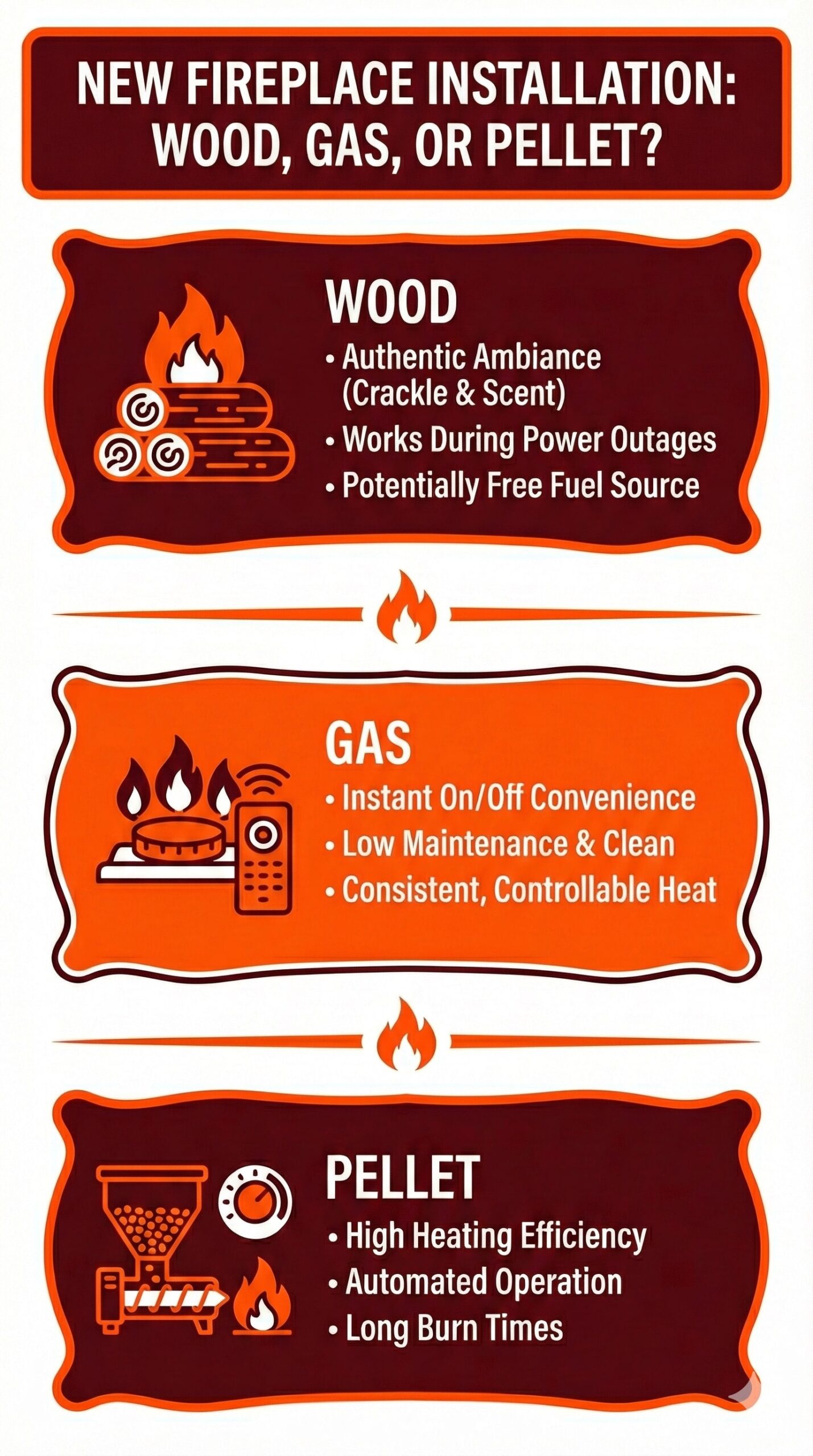
Choosing between wood, pellets, and gas is the first and most critical decision you will make during your new fireplace installation process. This choice dictates the entire infrastructure required behind the walls and determines your future maintenance routine. We help you navigate these differences so you can select the fuel source that fits your lifestyle.
Wood-Burning Installations
For those who want the traditional crackle and aroma of a wood fire, the installation is the most structurally demanding.
- Chimney Infrastructure: A wood system requires a Class A chimney pipe or a masonry flue capable of withstanding extremely high temperatures.
- Clearance Zones: The installation must account for strict clearance to combustibles to reduce fire risks.
- Floor Protection: You will need a non-combustible hearth extension (stone, brick, etc.) to protect your flooring from stray sparks or rolling logs.
- Ongoing Maintenance: Wood creates creosote which creates a need for regular sweeping. You must also commit to managing ash removal manually and sourcing seasoned firewood.
Gas Fireplace Installations
Gas units are popular in Rio Rancho for their convenience and cleanliness, and they offer unique installation flexibility.
- Venting Flexibility: Direct-vent gas units do not necessarily need a vertical chimney that runs through the roof or horizontally through an exterior wall.
- Utility Requirements: These installations require plumbing for the gas line. They also often require specialized electrical connections for blowers, lights, and pilot systems.
- Reduced Framing: Zero-clearance gas fireplaces often require less depth than traditional masonry, allowing you to maximize floor space in smaller rooms.
- Maintenance Needs: While gas burns cleaner than wood, it is not maintenance-free. The ceramic logs, burners, and glass need annual cleaning.
Pellet Stove Installations
Pellet stoves occupy a middle ground between the romance of wood and the automation of gas.
- Venting Specifics: These use a specialized venting pipe (PL vent) that is smaller than wood stove pipe.
- Power Needs: Pellet stoves require electricity to run the auger that feeds fuel to the fire and the fans that distribute heat.
- Storage Considerations: You need a dry place to store bags of pellets.
- Mechanical Maintenance: Pellet fuel creates fine ash that must be vacuumed out regularly (often weekly). The mechanical parts require periodic professional checks to ensure they are operating as reliably as possible.
Your Rio Rancho, NM Fireplace Company: Serving “The City of Vision”
Rio Rancho is a vibrant and rapidly growing community that offers a perfect balance of suburban tranquility and outdoor adventure. It is a place where neighbors still know each other and the landscape commands attention. We love working here because Rio Rancho homes often feature spacious layouts and high ceilings that are perfect for dramatic fireplace installations.
Residents here take pride in their local gems and the lifestyle the area affords:
- Rio Rancho Bosque Preserve: A beautiful spot for taking in the cottonwoods along the Rio Grande which reminds us of the natural beauty we try to reflect in our stone hearth designs.
- A Park Above: We love seeing families enjoy these inclusive playground facilities which represent the community spirit of our city.
- The Views: The sight of the Sandia Mountains at sunset turning that signature watermelon pink is a daily reminder of why people choose to live here.
- Community Growth: From the historic bustle near the Intel plant to the newer developments in Mariposa, Loma Colorado, and Cabezon, we are proud to be the trusted partner for homeowners looking to enhance their living spaces.
At Builders Materials, we are committed to adding value and comfort to homes across this beautiful high-desert landscape. We understand the local architecture (often stucco and tile) and the specific heating needs of Rio Rancho homeowners.
Do Earthquakes or Seismic Tremors Loosen Mortar Joints Enough To Create Dangerous Flue Gaps?
This is a question that surprises some homeowners. However, in the Rio Grande Rift valley, it is a valid concern for long-term structural integrity. While Rio Rancho does not experience the violent shifting seen on the West Coast, the region is seismically active enough that we must consider movement when planning a new installation.
If a chimney is built with rigid mortar and no reinforcement, even minor tremors or years of heavy vibration from nearby construction can cause hairline cracks in the mortar joints. Over time, these cracks can widen and compromise the system.
- Flue Liner Separation: If cracks occur in the clay tile liner or masonry, they can create gaps. These gaps can allow heat or toxic combustion gases to escape the flue and enter the home structure.
- Structural Instability: Unreinforced masonry can become unstable if the ground settles or shifts significantly. A chimney is a heavy vertical column and it needs help to stay upright during movement.
To mitigate this in a new build, we utilize modern construction standards designed to handle movement:
- Rebar Reinforcement: We include vertical steel rebar within masonry chimneys to provide tensile strength. This helps the structure move as a single unit rather than cracking apart during a tremor.
- Metal Flue Stabilizers: For factory-built metal chimneys, we use manufacturer-approved stabilizers and firestops. These secure the pipe to the framing while allowing for necessary thermal expansion and minor structural movement.
- Chase Strapping: When we frame a new chimney chase, we ensure it is tied securely into the roof and floor joists using heavy-duty metal straps. We do not rely solely on gravity or nails to keep the structure in place.
By accounting for potential movement during the installation phase, we prevent the formation of those dangerous gaps down the road. It is about building a system that is resilient. We want to ensure that your fireplace remains a self-contained system that vents properly regardless of the subtle shifts the earth might make over the decades.
How Do Chimneys Hold Up During High-Wind Storms? How Do We Prevent Downdrafts?
Rio Rancho is famous for its spring winds. Gusts can easily exceed 50 or 60 miles per hour during the transition seasons. These conditions put a tremendous amount of stress on anything protruding above the roofline. When we plan a new installation, wind load and draft performance are top priorities.
A chimney chase that extends significantly above the roof needs to be braced correctly. If a chase is too tall and narrow without internal bracing, high winds can cause several issues:
- Swaying: Excessive movement can damage the flashing where the chimney meets the roof. This breaks the waterproof seal and leads to water leaks that rot the roof decking.
- Disconnection: Violent swaying can cause the venting pipe inside the chase to disconnect at the joints which is a severe fire hazard.
- Framing Damage: We frame our chases with robust lumber and sheathing to withstand these lateral forces so the structure remains rigid.
Beyond the structure, wind affects how the fire burns. High winds passing over a roof can create zones of high and low pressure. If the chimney termination is located in a high-pressure zone, the wind can push air down the flue.
- Proper Positioning: We carefully calculate the chimney height relative to the roof pitch. We follow the “10-2-3 rule” for wood burning chimneys. This ensures the top is two feet higher than anything within ten feet to get the cap into clear air.
- High-Wind Caps: For gas and wood units in exposed areas (like on top of a mesa), we might use specialized high-wind termination caps. These are designed with baffles to deflect gusts and maintain a steady upward draft.
- Orientation Analysis: We consider the orientation of the house relative to the prevailing winds coming off the mesa. By positioning the vent correctly, we minimize the impact of our blustery spring weather on your indoor air quality.
Can a Chimney’s Draft Be Affected By Nearby Construction or House Tightness?
Yes. This is a critical consideration for new installations in modern Rio Rancho homes. As building codes have evolved, homes have become tighter and more energy-efficient. New windows, doors, and insulation packages do a great job of keeping weather out. However, they also seal air inside which can create significant drafting problems.
A fireplace functions like a giant vacuum. It needs a large volume of air to feed the fire and carry smoke up the flue.
- The Negative Pressure Problem: In a modern, tight home, there are fewer gaps for air to enter. If you turn on a kitchen range hood, a bathroom fan, or a clothes dryer, those appliances suck air out of the house. This creates negative pressure. The fireplace may lose the battle for air which results in smoke being pulled back into the room rather than venting outside.
- The “Stack Effect”: In multi-story homes, warm air rising to the upper levels can pull air out of the basement or lower levels. This can reverse the flow in a fireplace located downstairs causing cold air to dump into the room when not in use or smoke to spill when lit.
When we install a new fireplace, we assess the “house pressure” and implement solutions:
- Outside Air Kits (OAK): We almost always recommend or require the installation of an Outside Air Kit. This is a dedicated duct that runs from the firebox through the wall to the outdoors. It feeds the fire with fresh air directly from outside so it does not have to compete with your range hood for oxygen.
- Surrounding Obstacles: We look at the surroundings. If you are building an addition or if a neighbor builds a second story next door, it can change the wind currents around your roof. We try to anticipate these factors by placing the chimney in the most advantageous position possible.
Does Freeze/Thaw Weathering Accelerate Deterioration? How Can We Prevent It?
Even though we are in the desert, Rio Rancho experiences significant temperature swings. We have sunny winter days that reach 50 degrees and nights that drop well into the teens or single digits. This cycle is known as freeze-thaw. It is the enemy of masonry and exterior building materials. Essentially, porous materials like brick, stone, and mortar absorb moisture from rain or melting snow. When the temperature drops below freezing at night, that water expands as it turns to ice. This can cause:
- Spalling: This expansion exerts tremendous pressure from the inside out. It causes the face of the brick to pop off (spalling) which leaves the softer interior exposed to further damage.
- Joint Failure: It causes mortar joints to crumble and turn to dust which weakens the chimney structure and allows even more water to enter.
For a new installation, we take proactive steps to prevent this weathering before it starts:
- Breathable Waterproofing: If we are building a masonry chimney, we apply a breathable waterproofing agent once the masonry has cured. Unlike a sealer that traps moisture in, a breathable water repellent prevents liquid water from entering while allowing internal vapor to escape.
- Proper Crown Construction: We pay meticulous attention to the “crown” or chase cover at the very top. We install covers with a slight slope or “pitch” to shed water away from the structure rather than letting it pool.
- Drip Edges: We ensure the crown or chase cover has a drip edge that extends beyond the siding or brick. This ensures water drips onto the roof rather than running down the face of the chimney.
- Quality Materials: We select materials that are rated for severe weather conditions to ensure your installation looks beautiful and stands strong against the desert elements.
Ready To Upgrade Your Home With a New Fireplace?
Adding a fireplace is one of the most impactful ways to increase the value and enjoyment of your home. At Builders Materials, we handle every detail from the initial design consultation to the final safety check. Do not leave your comfort to chance or settle for a generic installation that doesn’t account for our unique local climate.
Contact us today to schedule your consultation. Let us help you design a hearth that is perfect for your Rio Rancho home. We look forward to helping you stay warmer this winter.